

Start using Cyber to power your prospecting.
.png)
A repeatable five-step process for turning a dozen donuts into documented Recon on your Dream 200 prospects — including the exact script and how to pivot from rapport to your Cyber Score Lead-In.
The average MSP spends roughly $23,000 to acquire a single client. A box of donuts costs $15–30 and gets you past the "no soliciting" sign, face-to-face with a gatekeeper, and one conversation away from Recon you can't get from a LinkedIn sequence. The Donut Method isn't a replacement for your digital outreach — it's the in-person layer that fills the gaps where emails go unanswered and connection requests sit pending.
This playbook walks through exactly how to execute it, from mapping your market to handing over a Cyber Score at the front desk. Watch the full video walkthrough for the live demonstration, then use this post as your field reference.
Open Google My Maps and search for your target vertical — attorneys, CPAs, dental offices, whatever fits your Dream 200. Pin every result. Google's geolocation data is the best free source for this, and you'll end up with a visual map of every prospect in your territory. Save each pin so you can plan driving routes later.
%20(1).png)
Head to leadhunter.icebergcyber.com. Plug in your city and vertical. Lead Hunter will pull the full list — for example, 311 engineering companies in Chicago. Not all of them are your targets. Filter by employee count, check websites, and narrow to the 20 you actually want to visit. These are the ones that fit your Dream 200 criteria: right size, right vertical, likely in or near a Buying Window.
%20(2).png)
The script is short on purpose. You're talking to a receptionist who was in the middle of something when you walked in. Speak slowly. Be ready to repeat yourself. Here's the framework:
"Hi, my name's [your name]. I work at [your IT company]. We love helping [vertical] with their IT. I wanted to come by, introduce myself, and make sure you're having a great day — so I brought you some donuts."
That's the opener. Don't overthink it. The donuts are a gift of reciprocity that builds enough rapport for the person to engage with you.
%20(6).png)
Every walk-in produces one of four responses. Know them in advance so nothing catches you off guard:
"That's so nice — would you like to talk to the office manager?" Say yes. Repeat the same script to the office manager. You just moved one layer deeper.
"Do you have a card? I'll give it to my boss." Hand over the card. You're now in the building's memory. Follow up in three days.
"This is perfect timing — we just had an issue." This is the jackpot, and it happens more often than you'd expect. Transition directly to the Cyber Score.
"Cool, thanks for stopping by." Worst case. You've still made a face-to-face impression. Log the visit as Recon in your Central Dashboard and schedule a follow-up touch.
%20(4).png)
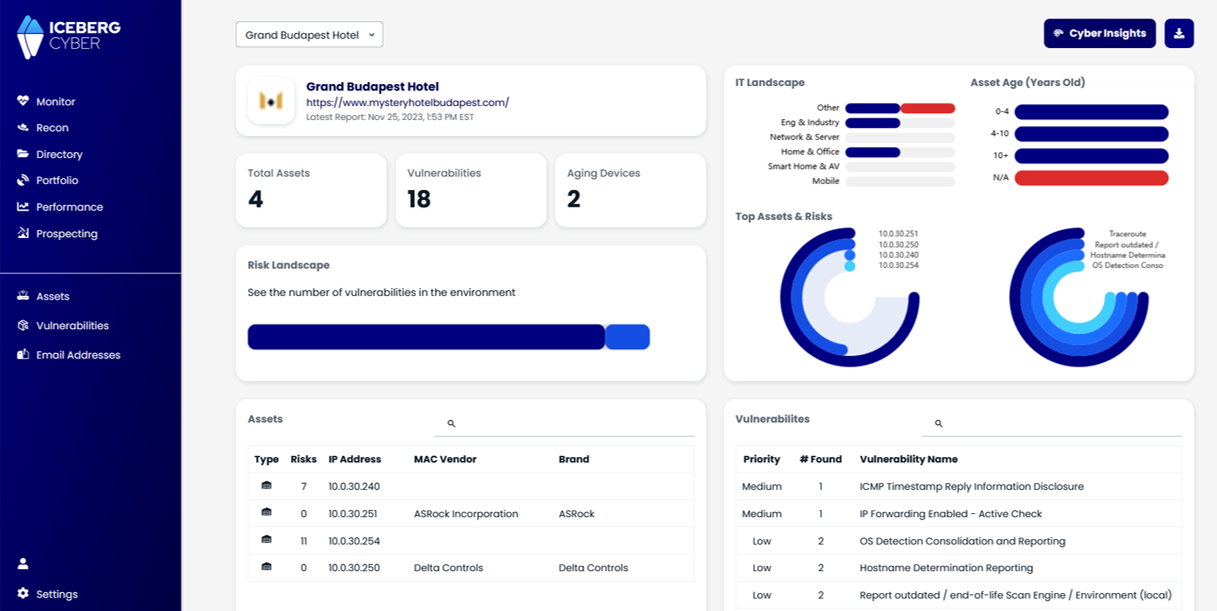
The donuts get people to open up. Once they're engaged, deliver the Cyber Score in front of them. Walk them through the findings — breached credentials, exposed emails — and let the evidence speak. Frame every finding as easy to fix. This is where rapport turns into a data-led conversation, and a data-led conversation is where pipeline starts.
Run a Cyber Score on your next five Dream 200 prospects, print the results, and pair each one with your next donut visit. Evidence in one hand, donuts in the other.

.jpg)

.png)
.png)
